


Bachelor’s Degree in Dentistry
A highly practical education from the outset, with a strong technological and clinical focus, enabling you to become a competent, up-to-date dentist who is ready to lead the way in oral health.
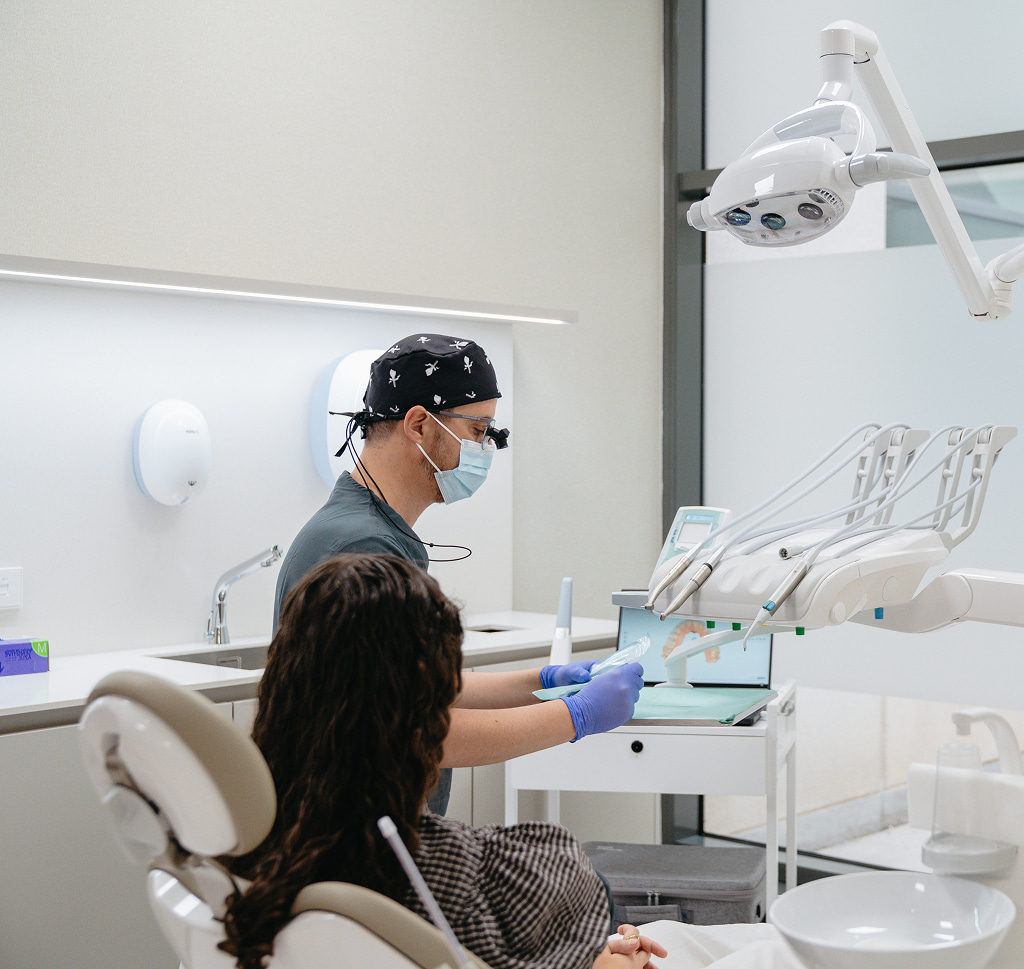
- ModalityOn-campus
- CampusCastellana
- Duration5 Years
- LanguageEnglish
- Credits300 ECTS
- Starts onSEP 2027
Bachelor's Degree Presentation
UNIE’s Bachelor’s Degree in Dentistry prepares you to become a committed healthcare professional, ready to care for people’s oral health with scientific rigour and responsibility. You will follow a comprehensive programme designed to respond to the real needs of society and today’s clinical environment, combining knowledge, precision and patient-centred care.
Over five years, you will build a strong scientific foundation while progressively developing your clinical skills. From your first year, you will begin preclinical training in simulated environments, advancing step by step towards treating patients under expert supervision, gaining confidence, competence and professional judgement.
Our academic model is connected to the professional world and grounded in active methodologies and advanced digital technologies. You will learn to integrate innovation into clinical practice while strengthening your expertise through electives in high-demand areas. At UNIE, we accompany you as you shape the professional you aspire to become, understanding dentistry as a path to contribute to people’s wellbeing through knowledge, precision and care.
Curriculum of the Bachelor in Dentistry in Madrid
During the first year, students acquire a solid grounding in basic subjects such as anatomy, histology, biochemistry, physiology and psychology, while also taking their first steps in clinical simulation.
| Subject | Semester | Type | ECTS |
|---|---|---|---|
| General and Orofacial Human Anatomy | Annual | Basic | 12 |
| Biostatistics | 1st | Basic | 6 |
| Cellular biology, genetics and histology | 1st | Basic | 6 |
| Microbiology and Immunology | 1st | Basic | 6 |
| Human Biochemistry | 1st | Basic | 6 |
| Psychology | 2nd | Basic | 6 |
| Human Physiology | 2nd | Basic | 6 |
| Oral histology | 2nd | Basic | 6 |
| Introduction to clinical dental practice | 2nd | Basic | 6 |
| Total credits | 60 |
The second year sees the start of clinical training, along with the acquisition of essential skills for professional dentistry, with subjects such as dental pathology and preventive and community dentistry. In this year students also acquire fundamental knowledge of medical pathology and pharmacology for a comprehensive approach to patient care.
| Signature | Semester | Type | ECTS |
|---|---|---|---|
| Epidemiology and Public Health | 1st | Basic | 6 |
| Pathological Anatomy | 1st | Compulsory | 3 |
| General Medical Pathology | 1st | Compulsory | 6 |
| History of Dentistry | 1st | Compulsory | 3 |
| Dental biomaterials | 1st | Basic | 6 |
| General Surgical Pathology | 2nd | Compulsory | 6 |
| Pharmacology Anaesthesia and resuscitation | 2nd | Compulsory | 9 |
| Radiology, medical physics and radiation protection | 2nd | Basic | 6 |
| Cariology | 2nd | Compulsory | 6 |
| Preventive and Community Dentistry | Annual | Compulsory | 9 |
| Total credits | 60 |
The third year marks the introduction to key areas such as dental prosthetics, dental pathology and therapeutics, orthodontics, oral surgical pathology and medical pathology, with an extensive focus on simulated clinical practice.
| Signature | Semester | Type | ECTS |
|---|---|---|---|
| Oral Medical Pathology | Annual | Compulsory | 12 |
| Oral Surgical Pathology | Annual | Compulsory | 12 |
| Dental Pathology and Therapeutics I | Annual | Compulsory | 12 |
| Dental Prosthetics I | Annual | Compulsory | 12 |
| Orthodontics I | Annual | Compulsory | 12 |
| Total credits | 60 |
In the fourth year, clinical activity is consolidated with care for real patients, addressing the different areas of dentistry.
| Signature | Semester | Type | ECTS |
|---|---|---|---|
| Dental Prosthetics II | Annual | Compulsory | 12 |
| Paediatric Dentistry | Annual | Compulsory | 12 |
| Dental Pathology and Therapeutics II | Annual | Compulsory | 12 |
| Periodontics | Annual | Compulsory | 12 |
| Orthodontics II | 1st | Compulsory | 6 |
| Legal and Forensic Dentistry | 2nd | Compulsory | 6 |
| Total credits | 60 |
Finally, the fifth year entails a high workload through clinical practice involving comprehensive dental treatment for adult, paediatric and medically compromised patients, together with specialization electives, training in dental clinic management and marketing, and completion of the Thesis.
| Signature | Semester | Type | ECTS |
|---|---|---|---|
| Special Care Dentistry and Gerodontology | 1st | Compulsory | 6 |
| Elective 1 | 1st | Elective | 6 |
| Dental clinic management and marketing | 2nd | Compulsory | 6 |
| Elective 2 | 2nd | Elective | 6 |
| Practicum | Annual | External Internships | 30 |
| Final Degree Project | Annual | Bachelor’s Thesis | 6 |
| Total credits | 60 |
| Signature | Semester | Type | ECTS |
|---|---|---|---|
| Aesthetic Restorative Dentistry | 1st or 2nd | Elective | 6 |
| Dental traumatology | 1st or 2nd | Elective | 6 |
| Artificial Intelligence in Health | 1st or 2nd | Elective | 6 |
| Human Nutrition | 1st or 2nd | Elective | 6 |
| Dental Photography | 1st or 2nd | Elective | 6 |
| Total credits | 30 |
Some subjects in the curriculum may be subject to change.
Regarding the range of electives on offer, a minimum number of students must be enrolled in each course for it to be delivered.
Faculty Members of the Bachelor's Degree in Dentistry
Learn from industry leaders

Virginia Sánchez Catalina
Career opportunities for the Bachelor in Dentistry
-

Professional practice in private dental clinics.
-
Dentist in public or state-subsidised health centres.
-
Practice in the military or prison health system.
-
Postgraduate training in specific areas (orthodontics, implantology, etc.).
-
University teaching or vocational healthcare training.
-
Research in biomedicine, biomaterials or dental public health.
-
Practice in other EU countries with automatic qualification recognition.

Join UNIE in 3 steps

1. Contact us
Start your Admission process by contacting one of our advisors through our email [email protected] or by calling +34 917 94 90 91.

2. Submission of documents
Book a time to take our entrance tests. You must complete our three-part admission test: Assessment of skills and attitudes towards intellectual work, English and merit assessment, where you can indicate everything related to your supplementary, professional and other educational experiences, such as volunteering, sport, etc.

3. Admission and enrolment formalisation
If the evaluation is favourable, you will be able to pay the reservation fee to secure your place.
Access for the Bachelor in Dentistry
The Bachelor’s Degree in Dentistry is aimed at people with a vocation for healthcare and attending to patients’ needs, an interest in science and manual skills. The following are particularly valued:
- Interest in people’s well-being and health.
- Interpersonal communication and teamwork skills.
- Scientific curiosity, responsibility and critical thinking.
- Psychomotor skills and attention to detail.
It is recommended to have completed a higher secondary-school program of study based on biology, physics and chemistry.
Scholarships & Financial Support
Nothing should stand in the way of how far you can go.