


Master’s Degree in Data Science and Business Intelligence
Become an expert in Data Science, Artificial Intelligence and Business Intelligence, and lead advanced data analytics and data-driven business intelligence projects.

- ModalityOn-campus
- CampusArapiles
- Duration1 Year
- LanguageEnglish / Spanish
- Credits60 ECTS
- Open callAPR 2027 / OCT 2027
Why study this programme
Become an expert in Data Science, Artificial Intelligence, and Business Intelligence, and lead strategic data analytics and business intelligence projects in corporate environments.

Gain access to a real business ecosystem. Develop the skills employers are looking for and train in line with the current demands of the technology sector.

Learn through simulations, hands-on projects, and real business challenges.

Enhance your professional profile by earning certifications from leading global technology companies, integrated into your study plan.

Become part of a vibrant university community through events, networking activities, and student clubs.
What will you learn in the Master in Data Science and Business Intelligence?
In this Master's programme, you will learn to master the most advanced tools and technologies in Data Science, enabling you to successfully develop data analytics and business intelligence projects in corporate environments—from data processing and modelling to their application in strategic decision-making.
Its multidisciplinary approach, combining statistics, programming, artificial intelligence, and business intelligence, will equip you with the essential skills across three key areas: Data Engineering, Data Science, and Business Intelligence.
Prepare to become the highly qualified professional that organisations are looking for in today's data-driven economy.
Learn from and earn certifications alongside leading industry experts

Access high-demand careers in Data Science
The Master's Degree in Data Science and Business Intelligence prepares you for strategic roles in one of today's fastest-growing sectors, where data analytics, artificial intelligence and business intelligence have become essential capabilities for organisations across every industry.
According to the World Economic Forum's Future of Jobs Report 2025, professionals specialising in Data Science, Artificial Intelligence, and Advanced Analytics are among the fastest-growing occupations worldwide, with increasing demand and outstanding employability prospects.
Throughout the programme, you will develop the technical and analytical expertise needed to design, implement, and manage data-driven solutions across a wide range of industries.
This Master's programme will prepare you to work within multidisciplinary teams and lead digital transformation projects, creating real business value through the strategic use of data.
-

Data Scientist
Analyse large-scale datasets and develop predictive models to support strategic decision-making.
-
Data Engineer
Design and manage scalable data infrastructures and large-scale data processing systems.
-
Business Intelligence (BI) Analyst
Transform complex data into actionable business insights through advanced data visualisation and reporting.
-
Artificial Intelligence Specialist
Develop AI-powered solutions using machine learning and intelligent automation techniques.
-
Senior Data & Analytics Consultant
Advise organisations on the implementation of data-driven strategies and digital transformation initiatives.
-
Data Architect
Design the architecture and governance of complex data ecosystems.
Professional profile
Upon completing the Master’s Degree in Data Science and Business Intelligence, you will be able to:
- Identify opportunities for operational and strategic improvement through data analysis, applying advanced methodologies to support decision-making.
- Analyze and leverage large volumes of data from multiple sources, transforming them into valuable business insights.
- Design and implement predictive models and artificial intelligence solutions to anticipate trends and optimize business processes.
- Apply business intelligence and data visualization tools to communicate results clearly and support business strategy.
The program in numbers
A curriculum designed for you
We have updated the syllabus to align it with the latest market trends.
| Course | Semester | Type | ECTS |
|---|---|---|---|
| 1º | Obligatoria | 6 | |
| 1º | Obligatoria | 6 | |
| 1º | Obligatoria | 6 | |
| 1º | Obligatoria | 6 | |
| 1º | Obligatoria | 6 | |
| 2º | Obligatoria | 6 | |
| 2º | Obligatoria | 6 | |
| 2º | Optativa | 6 | |
| 2º | TFM | 12 | |
| Total credits | 60 |
Some courses included in the curriculum may be subject to change.
The availability of elective courses is subject to a minimum number of enrolled students in each course.
This programme is currently undergoing evaluation by the Fundación para el Conocimiento Madri+d and final verification by the Spanish Universities Council (Consejo de Universidades).
Make a difference in Data Science and Business Intelligence with UNIE
Experience an educational journey that connects you to the realities of the industry through real-world projects and case studies, and tackle these challenges with innovative solutions.
Learn about best educational practices from experts and leaders in Data Analysis who will share specialized knowledge with you so that your professional profile stands out in the industry.
Put the skills you’ve acquired to the test by solving real-world and simulated cases that connect you to the professional reality of the industry. Analyze data and trends to create predictive models, design management and monitoring structures, and generate dashboards that enable successful decision-making.
Amazon Web Services Certifications
We prepare you to obtain Amazon Web Services (AWS) Certifications by providing access to official AWS training courses in Data Analytics, Data Engineering, Cloud Computing, and Data Science.
Stand out with the key digital skills needed to tackle today's and tomorrow's technological challenges
Through Python, you will develop programming and data analysis skills. With AWS, you will learn how to manage cloud infrastructures for scalable data storage and processing. Docker enables you to deploy applications in controlled environments. Using Anaconda, you will optimize data science development through efficient package management and virtual environments. Create interactive visualizations and dynamic reports with Power BI, an essential tool for data-driven decision-making. You will also gain knowledge of distributed processing for large-scale datasets using Apache Spark.
UNIE's Master's Degree in Big Data stands out for its focus on technological innovation, combining practical, hands-on learning with collaborative work in cutting-edge environments.
Master the tools most in demand by employers and become a highly sought-after professional with up-to-date and innovative skills.
Learn from practicing professionals
The faculty combines teaching with business experience. Learn about the realities of the industry from those who lead it.

José Fernández Tamames

Manuel Suárez Román

José Cabrero Holgueras

David Alba Burbano

Jesús Daniel Franco
Partners







Discover Our Campus in Madrid

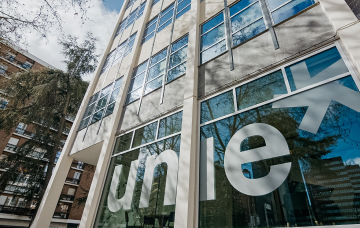

Campus Arapiles
Where it all happens
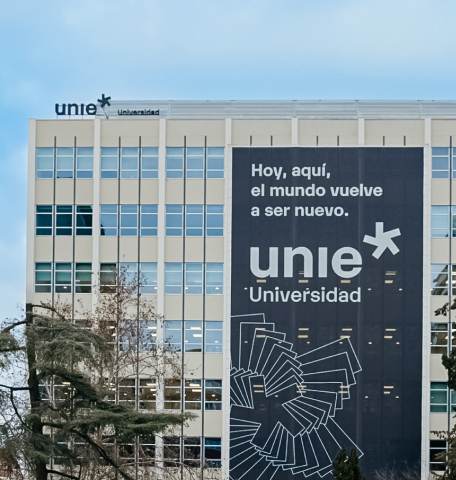
Where it all happens
You may be interested in
-

Master’s Degree in Supply Chain Management
Business & TechBecome the expert capable of making the changes that increase supply chain efficiency.
-

Master’s Degree in Project Management
Business & TechTraining in project management, one of the fastest growing professions across all industries worldwide in terms of demand.


Entry profile for the Master's Degree in Data Science and Business Intelligence
How to Apply for the Master's Degree in Data Science and Business Intelligence.
Recommended Profile
This master's degree is designed for individuals who want to specialize in Data Science, Business Intelligence, or Artificial Intelligence and build a career in technology- and business-driven environments.
It is particularly suitable for:
- Graduates in Statistics, Data Science, Computer Engineering, or Telecommunications Engineering who wish to deepen their expertise in advanced analytics and predictive modeling.
- Graduates in Mathematics, Physics, or other engineering disciplines looking to steer their careers toward data analytics and artificial intelligence.
- Professionals with experience in technology or business environments who want to specialize in data science, business intelligence, or advanced analytics.
- Individuals with a basic background in programming, mathematics, and statistics who are interested in applying these skills to solve business challenges.
- Candidates with a strong interest in digital transformation, innovation and the strategic use of data for decision-making.
Entry Requirements
To be admitted to the programme, applicants must hold an official university degree, in accordance with current regulations (Royal Decree 822/2021).
Specific Admission Criteria
The programme is primarily aimed at applicants with academic backgrounds in technical fields such as Engineering, Statistics, or Data Science, although candidates from other scientific or technological disciplines are also encouraged to apply.
If your previous studies do not include foundational knowledge of programming, mathematics, or data analysis, you may be required to complete bridging courses designed to ensure you are fully prepared to succeed in the programme from day one.
Professional experience in the field of data is also taken into consideration. In some cases, applicants may be required to demonstrate a minimum of two years of professional experience in environments related to Data Science or Business Intelligence.
Admission Process at UNIE Step by Step

1. Ask for information
Start your admission process by getting in touch with our advisers at [email protected] or call + 34 919 032 201 and they will guide you through the process.

2. Submit documents
You must provide the required documentation: academic certificate, curriculum vitae, and a letter of motivation. Once you have submitted these documents, the Admissions Committee will assess your application.

3. Admission and enrolment
If the evaluation is favourable, you will be able to pay the reservation fee to secure your place.
Scholarships & Financial Support
Nothing should stand in the way of how far you can go.

Frequently asked questions
In this programme, you will gain a comprehensive understanding of the entire data lifecycle, from data collection and storage to analysis and business-driven decision-making. You will learn to work with data analytics, artificial intelligence, data visualization, and business intelligence tools, developing solutions that create value in real-world business environments.
This programme is designed for university graduates in fields such as Engineering, Mathematics, Statistics, Economics, Business Administration, or related disciplines. Professionals with experience in data analysis or technology-driven environments are also encouraged to apply.
Data Science and Business Intelligence are among the fastest-growing and most in-demand fields in today's job market. Upon graduation, you will have a hybrid professional profile that combines technical expertise with strategic business insight, preparing you for roles such as Data Analyst, Data Scientist, Business Intelligence Analyst, or Data Consultant.
You will develop the ability to analyze large datasets, design predictive models, interpret results, and communicate insights effectively. You will also strengthen your decision-making skills by applying data-driven approaches to business challenges.
You will learn to use programming languages and tools such as Python, SQL, data visualization platforms including Power BI and Tableau, as well as machine learning techniques, applied statistics, and data management technologies.
The programme follows a hands-on, project-based methodology. You will work with real business cases, industry datasets, and professional tools widely used in the data sector, promoting collaborative and applied learning.
The programme is aimed at university graduates and professionals interested in data analytics, business intelligence, and digital transformation who possess strong analytical skills and a motivation to develop expertise in emerging technologies.
Depending on your previous academic background, you may be required to complete bridging courses in areas such as programming, mathematics, or statistics. The duration of these courses varies according to your individual profile and is designed to ensure you are fully prepared for the programme.
Curricular internships are carried out in partner companies, giving you the opportunity to apply your knowledge in a real professional environment while working on projects related to data analytics and business intelligence.
The Master's Final Project consists of developing an applied project in which you will integrate the knowledge and skills acquired throughout the programme to solve a real-world challenge in the field of Data Science or Business Intelligence.
Throughout the programme, you will work with tools such as Python, integrated development environments (IDEs), database management systems, and data visualization platforms. Software licences will be available during your academic studies, although access periods may vary depending on the specific software.